How to follow VALORANT Champions Shanghai group stage like a pro analyst
You can order the same kind of articles for your own video to boost it on YouTube and Google. Just message the Telegram bot @sat_sit_bot. Articles with your video embedded are written and posted by the bot itself — on popular topical sites (no ads). Your first 50 articles are free.
· based on the channel VALORANT Champions Tour
VALORANT Champions Shanghai is the 2026 world championship, and the group stage is where you learn which regions actually deserve their seeds. To follow it properly, treat the broadcast as a data source: track map pools, pistol-round conversion and clutch rates instead of highlight reels. The official hub at VALORANT Esports on X posts schedules, results and bracket updates faster than any recap.
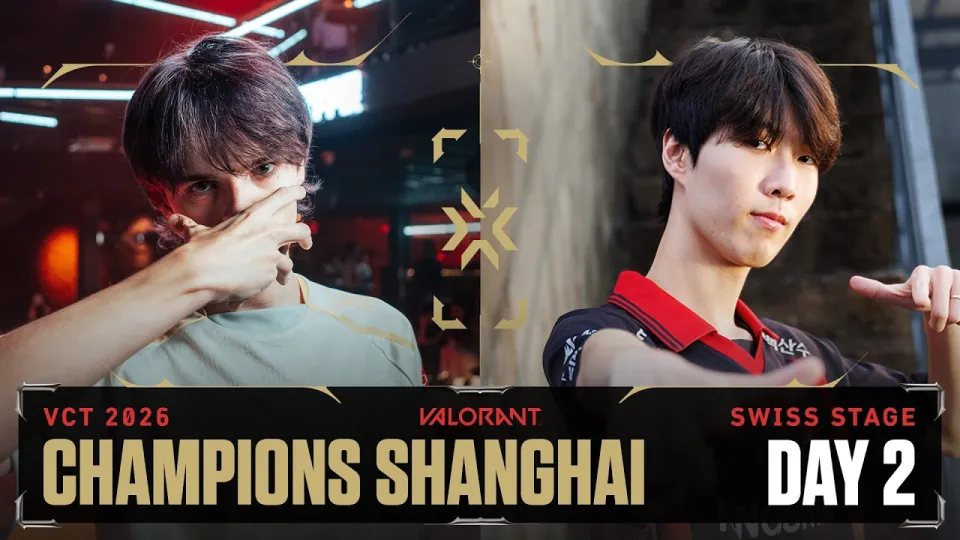
The event runs from September 24 to October 18, bringing sixteen teams from the Americas, CN, EMEA and Pacific into one bracket. The Day 2 group stage broadcast from the VALORANT Champions Tour channel is a full-day VOD, which means the smartest way to consume it is by match block, not in one sitting.
What the VALORANT Champions Shanghai format actually asks of teams
The format is simple on paper and brutal in practice: sixteen teams, four regions, a group stage that separates the teams with real map depth from the ones carried by one comfort pick. Every era eventually meets its challenger, and 2026 has already produced two Masters where a new champion rose. That context matters, because it means no roster arrives in Shanghai with an aura that wins vetoes for free.
For a viewer, the format creates three things worth tracking:
- Map pool breadth — teams that can only win on two maps get exposed in a best-of-three group stage.
- Region seeding — four CN slots, plus Americas, EMEA and Pacific representation, shape who meets whom early.
- Adaptation speed — the gap between Day 1 and Day 2 of groups is usually the clearest signal of coaching quality.
How to read a group stage day without spoilers
The most common complaint around a full-day VOD is that the result is visible before you press play. The broadcast team addresses this directly: the top-liked comment on the Day 2 video is a spoiler-blocker post with timestamps hidden in replies, which is the standard community workaround for a twelve-hour stream.
A practical routine for a spoiler-free watch:
- Open the VOD and jump straight to the match block you want using the chapter markers, not the thumbnail.
- Avoid the recommended sidebar, which will surface result videos and post-match interviews.
- Watch the veto first. The map picks tell you which team expects to lose the opener and which team is hiding a pocket comp.
- Save the analyst desk segments for after the series; they often reference later results.
If you do get spoiled, the series still has value. Watch the losing side's attack halves and note how often they defaulted to the same execute — that pattern is what gets punished in elimination matches.
Why the China debate keeps dominating VALORANT Champions Shanghai threads
Region strength is the loudest argument in the comment section, and it is worth separating the noise from the actual question. Several viewers argue that four Chinese slots are wasted, suggesting the region should be merged into Pacific so the strongest Pacific teams reach international events instead. Others point to a specific round where a team's in-game comms were broadcast and judged weaker than ranked play.
The honest analytical version of that argument looks like this:
- Slot allocation is a business and growth decision as much as a competitive one; a home-market event in Shanghai will always carry regional representation.
- Judging a region by one broadcast round of comms is unfair, but judging it by conversion rate in close maps is fair.
- The measurable test is not "does CN deserve four slots" but "how many CN teams survive the group stage and how many map points they take off top seeds."
That framing also explains why so many pick'ems collapsed. Choosing a region to be eliminated early felt safe on paper and looked very different once the group stage played out.
What the viewer complaints reveal about broadcast pacing
Beyond seeding, the Day 2 thread surfaces two production issues that recur at every international event. The first is pacing: one comment describes the day as a speedrun, which usually means several series ended in clean sweeps and the schedule compressed. The second is interview translation, where viewers note that a short answer can take noticeably longer once interpreted, slowing the desk segments.
Neither is a competitive issue, but both affect how you watch. If you are short on time:
- Skip the pre-match desk on sweep days and start at the veto.
- Watch the post-match interview only when a team lost a map they were favored on.
- Use the highlight cut for series that ended 2-0 with both maps decided before round 20.
The emotional spikes are worth catching live, though. A clip around the two-hour eleven-minute mark of the Day 2 VOD is tagged by viewers as a genuine rage moment, and those reactions often say more about pressure than any stat sheet.
How to build a pick'em that survives the group stage
Pick'ems reward process, not loyalty. The viewers who called the group stage correctly did not pick the biggest brand names; they picked the teams with stable map pools and reliable pistol-round discipline.
A repeatable method:
- Rank each team by maps won in the last two international events, not by domestic titles.
- Weight pistol rounds heavily — they decide roughly a fifth of all rounds and swing momentum in best-of-threes.
- Check the veto history between the two teams; repeat matchups tend to repeat map choices.
- Fade any team that has not played a competitive series on the current patch.
- Keep one upset pick per group, no more. Group stages punish over-creativity.
This is also why the "five Radiants versus five bronze" style complaints appear after lopsided days: the eye test reacts to scorelines, while the format reacts to map depth, and the two do not always agree.
Useful links
The broadcast description collects every official channel for schedules, clips and behind-the-scenes content:
- https://www.facebook.com/ValorantEsports/
- https://www.instagram.com/valorantesports/
- https://www.tiktok.com/@valorantesports
- https://www.twitch.tv/valorant
Live coverage and the full VOD archive sit on the VALORANT Champions Tour YouTube channel, which produced this Day 2 group stage broadcast.
Final takeaway
The group stage of VALORANT Champions Shanghai is best watched as a coaching exercise: vetoes, pistol rounds and adaptation between days tell you who can win a bracket, while scorelines tell you who already did. The Day 2 VOD from the VALORANT Champions Tour is a useful reference point because it captures a full day of that process, including the production quirks and the crowd reactions that shape how the event feels. If you want to stay current with schedules and results, follow VALORANT Esports on X and check the official channels before each match day.
Key takeaways
- VALORANT Champions Shanghai runs September 24 to October 18, with 16 teams from Americas, CN, EMEA and Pacific fighting for the 2026 world title.
- The tournament follows two Masters events in 2026 where a new champion rose each time, ending the era of a single dominant favorite.
- Group stage Day 2 was broadcast by the VALORANT Champions Tour channel as a full-day VOD with a spoiler-blocker timestamp comment.
- China holds four of the sixteen slots, a format point that dominates viewer debate about region strength and international seeding.
- Pick'ems for the event reward reading regional form, not brand names, since Chinese squads were widely picked to exit early.
Questions & answers
How many teams play at VALORANT Champions Shanghai and where do they come from?
Sixteen teams qualify for the event, drawn from four regions: Americas, CN, EMEA and Pacific. China holds four of those slots, which is the main reason region allocation is debated so heavily in the community. The tournament runs from September 24 to October 18 and crowns the 2026 world champion.
Why do viewers complain about spoilers in full-day VODs?
A full broadcast day can run for many hours, so the result is often visible in the thumbnail, title or recommended sidebar before you start watching. The common fix is a community spoiler-blocker comment that hides timestamps in its replies, letting viewers jump to specific match blocks without seeing scores.
Is the criticism of the Chinese region fair?
It is partly fair and partly overstated. Slot allocation is driven by market growth as much as competitive results, and judging a whole region by one broadcast round of in-game comms is a weak sample. The measurable question is how many CN teams survive groups and how many map points they take from top seeds.
How should I approach pick'ems for a group stage?
Rank teams by maps won at recent international events rather than domestic titles, weight pistol-round performance, and check veto history in repeat matchups. Limit yourself to one upset pick per group, because group stages reward consistency over creative betting.
Source: VALORANT Champions Shanghai — Group Stage — Day 2 · Markdown version